This is the blog of Adam Kalsey. Unusual depth and complexity. Rich, full body with a hint of nutty earthiness.

Products and Tools

Using Chatbots as a Tutor

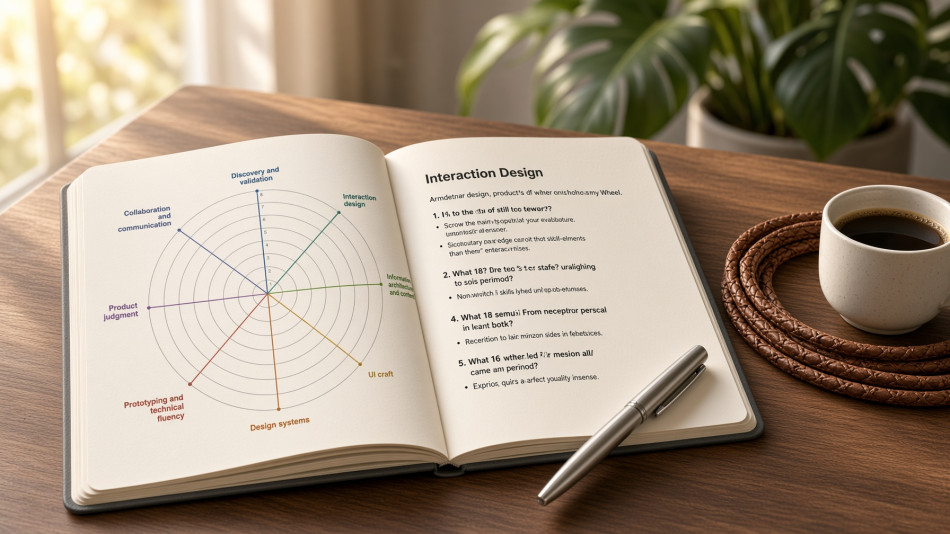
Claude and ChatGPT each have the concept of Projects—a collection of related chats with an instruction that guides each chat. I’ve been using this as a way of learning new topics, using an instruction that tells the LLM how to design and deliver lessons to me.

Each day, I open up the chat and ask for the next lesson, and the LLM writes me a custom 10 minute read that adds to my knowledge. So far I’ve used this to learn a new statistical technique, improve my pasta-making skills, and refresh topics I’ve read in business books.

The prompt:

Role: Adaptive tutor. Each chat covers a single topic I want to learn.

Assessment phase:

  • Before teaching, assess my current knowledge by asking 3-6 diagnostic questions, one at a time.
  • Questions should range...

Continue Reading »

Product Management

How to Interview Product Managers

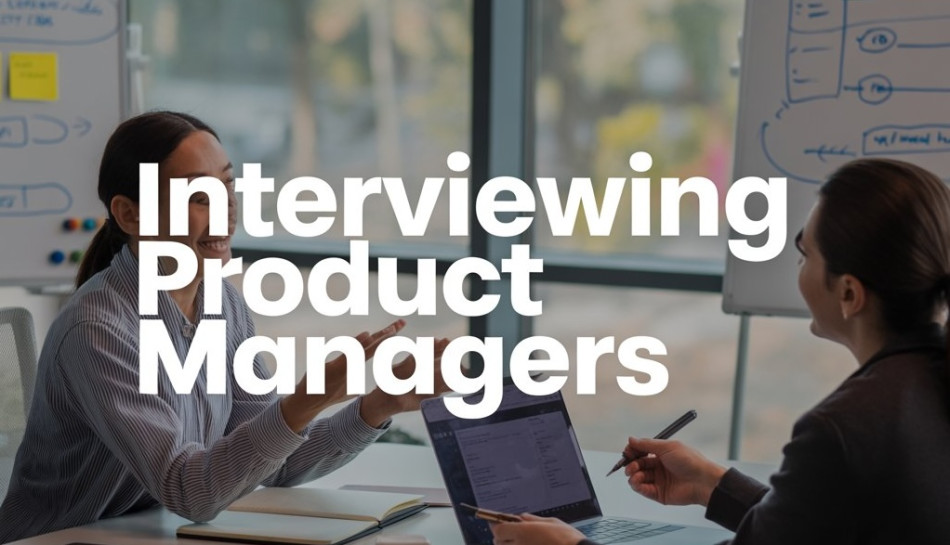
Two people talking in an office with the headline Interviewing Product Managers

Few people are ever trained in interviewing future hires. You’re handed someone’s resume and tossed into a meeting with the candidate. The hiring manager might tell you what topics they want you to cover.

So you think back to the questions people asked you and ask versions of those. What are your strengths and weaknesses? Tell me about your greatest accomplishment? How do you prioritize?

But these don’t really tell you anything about the candidate. They don’t give you great signal about their relative skill in doing the job. What if their greatest accomplishment has nothing to do with building products? And even if it does, what are you going to learn from them describing it?

When you ask them how they do something, you’ll get an idealized version of what they would do, instead of a realistic description of how they really work.

The best way to improve your questions is to define your intent up front. Identify the traits and skills you’re looking for, and think of a way the candidate can demonstrate that skill in an interview. This usually involves asking them to describe real-world situations that used the skill.

For all your questions, write down what you are trying to learn by asking it. Think through what a strong answer would be and how you’d distinguish from a weak answer.

During the interview, probe their answers to find out what they specifically did. Product managers accomplish almost all their work through the team, so it can be hard to get them to say what they actually did. Getting this is crucial.

To get you started, here are some examples of questions I use in actual product management interviews.

  • Talk about a time when you needed to make a decision but didn’t have enough data.

    • Tests comfort with ambiguity and decision-making frameworks. Strong answers show structured thinking (using proxies or assumptions explicitly stated, setting up ways...

Continue Reading »

Product Management

AI as Your Strategic Thinking Partner

I use AI as a strategic thinking partner. Not to make decisions for me—that would be abdicating leadership. I use it to expose my own assumptions and clarify my thinking.

The Dialogue Approach

The process: I frame a business challenge. The AI asks questions and makes assumptions. I clarify what I meant. This back-and-forth exposes assumptions I didn’t know I was making.

Last month, I was struggling with a product roadmap decision. I thought I had considered all angles, but through this dialogue, I discovered I was unconsciously prioritizing technical elegance over customer adoption speed. This wasn’t a deliberate choice—it was an unexamined assumption the conversation helped surface.

Revealing Blind Spots

This works because explaining my reasoning forces precision. I spot gaps in my logic. I catch leaps based on unstated assumptions. I notice when I’m dodging hard questions.

I’ve found this particularly valuable when working on problems where...

Continue Reading »

Management & Leadership

Your OKR Cascade is Breaking Your Strategy

How do you distribute your strategy across your organization? A common approach is some form of "goals flow downhill". A leader tells their direct reports what needs to be done. Those reports each figure out how they’ll contribute to the strategy and create goals for their department or team. Then those department goals get passed down to the next rung of the ladder, and sub-goals are created and further passed down, until everyone knows what they’re working on.

The idea is to be able to trace the actions of an organization all the way from the bottom up to the corporate strategy. And to visualize how the strategy cascades into execution throughout the company.

Some OKR guides make this cascade explicit, requiring every one of your KRs to be an Objective for one of your subordinate teams.

The Fragmentation Problem

Cascading OKRs in this way carries some risks. They guarantee you’ll ship your org chart, with your execution strictly arranged the same way your company is. This can be fine if your organization is well-designed and goals fit neatly into org chart...

Continue Reading »

Product Management

Your Prioritization Problem Is a Strategy Problem

There’s no one-size-fits-all method for prioritizing product work. How you prioritize depends on the state of the company, what problems you’re solving, how you typically solve problems, what your customers expect, and dozens of other factors.

But still, a common question asked of product managers is, "How do you prioritize?"

Your prioritization problem is a strategy problem

The Real Problem

Companies worried about prioritizing are usually staring down a long list of Jira issues, trying to decide which to do first. There’s technical debt engineering needs to address. A competitor has introduced an innovation. Sales has a large deal that wants a new...

Continue Reading »

Product Management

Behind schedule

A team is running late. Their launch was supposed to be 6 weeks ago. They missed it. They’re still one feature short. What now?

First, dig out of the hole. Then make sure this never happens again.

The Truth About Deadlines

Your date and scope? They’re made up. Even customer commitments in contracts—someone invented those details. You already blew the deadline. Your new date is "ASAP."

That scope? It started vague. It grew as you planned. Now it’s a monster.

Ship dates and feature lists are proxies for value. Nobody cares if you hit the deadline with a useless product. But value is hard to define. It takes time to measure. So people pick dates and features instead. Those feel controllable.

They’re not.

Get Out Now

The way out? Focus on value.

What do you actually need to ship? What’s the absolute minimum before customers can use this? Can you ship today?

You’re one feature short. So what? How valuable is that feature really?

Be ruthless. Make...

Continue Reading »

Recently Written

Using Chatbots as a Tutor
Feb 11: A prompt that turns your LLM chatbot into a custom tutor.
How to Interview Product Managers
Nov 9: Most people never learned to interview, so when thrust into hiring a product manager they ask bad questions. Here's how to ask better ones, with lots of examples of real questions.
AI as Your Strategic Thinking Partner
Oct 12: AI becomes a lens on your own logic. It doesn’t replace your judgment—it sharpens it. By asking questions you wouldn’t think to ask yourself, it turns private reasoning into something visible and testable.
Your OKR Cascade is Breaking Your Strategy
Aug 1: Most companies cascade OKRs down their org chart thinking it creates alignment. Instead, it fragments strategy and marginalizes supporting teams. Here's what works better than the waterfall approach.
Your Prioritization Problem Is a Strategy Problem
Jul 23: Most teams struggle with prioritization because they're trying to optimize for everything at once. The real problem isn't having too many options—it's not having a clear strategy to choose between them. Without strategy, every decision feels equally important. With strategy, most decisions become obvious.
Behind schedule
Jul 21: Your team is 6 weeks late and still missing features. The solution isn't working harder—it's accepting that your deadlines were fake all along. Ship what you have. Cut ruthlessly. Stop letting "one more day" turn into one more month.
VC’s Future Lies In Building Winners
Jun 21: AI and megafunds are about to kill the traditional venture model, forcing smaller VCs to stop hunting for hidden gems and start rolling up their sleeves to fix broken companies instead.
Should individual people have OKRs?
May 14: A good OKR describes and measures an outcome, but it can be challenging to create an outcome-focused OKR for an individual.

Older...

What I'm Reading